
Slab Leak Detection and Repair in Gardena, CA
A slab leak is a leaking water pipe under a concrete floor. It can run for weeks unseen, so knowing the signs and the repair options helps you act early.
Free to call. Gardena Water Line Pros is a referral service that connects you with an independent local provider. How it works.
What is a slab leak?
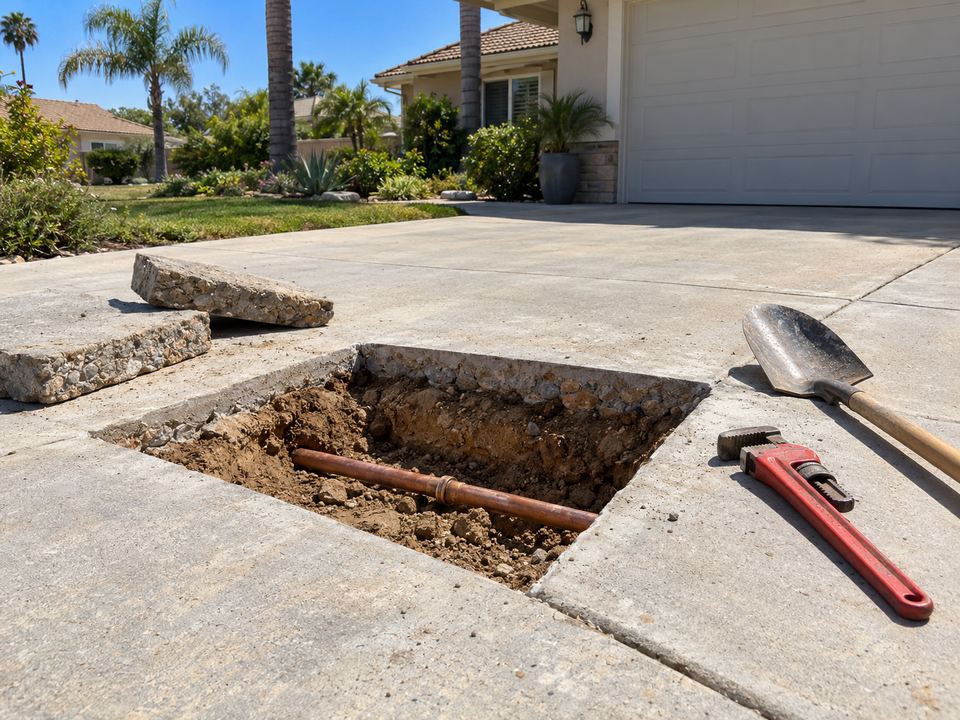
Short answer: a slab leak is a leak in a pressurized water pipe that runs under or inside a home's concrete floor slab. Many Gardena houses are single-story homes built on concrete slabs, so their hot and cold supply pipes often run beneath the floor.
Because the pipe is buried in or under concrete, the water has nowhere obvious to go. It can soak the soil under the house, wick into flooring and walls, and raise your water bill long before you see a puddle. A slab leak is different from a leak in the main water line in the yard, although the meter test below helps with both.
Signs of a slab leak
- A warm or hot spot on the floor, often noticed barefoot. This points to a leak in a hot water line.
- The sound of running water when every fixture is off.
- A water meter that keeps moving with all water use stopped.
- Damp or warped flooring, lifting tile or laminate, or a musty smell from carpet.
- A water heater that runs constantly or a gas bill that rises along with the water bill.
- New cracks in the floor or baseboards, or water at the base of an outside wall.
- Lower water pressure or a higher water bill with no change in habits.
One sign alone isn't proof. A running toilet, an irrigation valve or a leaking water heater can cause several of the same symptoms.
A quick check before you call
- Turn off every faucet, appliance and the irrigation system.
- Look at the water meter's leak indicator. If it moves, water is flowing somewhere.
- Close the valve on the cold water inlet at the top of the water heater. If the meter stops, the leak may be on the hot side.
- Close the main house shutoff. If the meter still moves, the leak may be in the service line between the meter and the house instead.
The step-by-step version is in how to check your water meter for a leak. Leave the valve inside the meter box alone; it belongs to Golden State Water.
How slab leaks are found
Providers usually pressure-test the hot and cold lines separately to confirm which one is losing water. Then they narrow down the location with acoustic listening equipment, thermal imaging (useful for hot water lines) and pipe locating. Pinpointing the spot first can mean a smaller opening in the floor. For more on the methods, see water line leak detection.
Slab leak repair options
- Direct (spot) repair. The floor is opened above the leak, the damaged section is repaired, and the concrete and flooring are restored. This can suit a single leak in otherwise sound pipe.
- Reroute. The failing line is abandoned and a new line is run through walls, the attic or along the exterior, avoiding the slab. Often discussed when pipes are old or the leak is hard to reach.
- Repipe. Replacing most or all of the home's supply piping. Usually considered after repeated leaks. See whole-house repiping.
- Pipe lining or coating, offered by some providers for certain pipes. Suitability depends on the pipe's condition and material.
A provider recommends an option after testing. It's reasonable to ask why they chose it and what the alternatives would involve.
Cost and insurance
We don't publish prices because they vary with the home and are set by each provider. The main factors are how easy the leak is to locate, the type of flooring that has to be removed and replaced, whether a reroute or repipe is needed, and any water damage cleanup. Many homeowners policies treat the damage caused by a sudden leak differently from the cost of repairing the pipe itself, so check your policy. See does homeowners insurance cover water line repair?
Questions to ask a slab leak provider
- How will you confirm which line is leaking and where, before opening the floor?
- Do you recommend a spot repair, a reroute or a repipe here, and why?
- Who restores the concrete and flooring, and is that included in writing?
- Does the job need a permit, and who arranges the inspection?
- What is your California contractor license number? You can look it up with the Contractors State License Board.
Slab leak FAQs
How do I know if I have a slab leak?
Common signs are a warm spot on the floor, the sound of running water with everything off, a water meter that keeps moving, damp or lifting flooring and an unexplained rise in the water bill. A provider can confirm it with pressure testing.
Is a slab leak an emergency?
An active slab leak can damage flooring, walls and the soil under the house, so it is worth acting quickly. If water is spreading, shut off the main valve and see our emergency plumbing steps.
Can a slab leak be fixed without breaking the floor?
Sometimes. Rerouting the line through walls or the attic avoids opening the slab, and some providers offer pipe lining for suitable pipes. Whether these fit depends on the home and the pipe.
Should I repair the slab leak or reroute the pipe?
A single leak in otherwise sound pipe may suit a spot repair. Older pipes, repeat leaks or a hard-to-reach location often lead providers to suggest a reroute or repipe. Ask the provider to explain the trade-offs.
Does homeowners insurance cover slab leaks?
It depends on the policy. Many policies treat sudden water damage differently from repairing the pipe itself. Check your policy and talk to your insurer before work starts.
Think you have a slab leak?
Call and describe the signs. We'll connect you with an independent local provider who can talk through leak detection.