
Signs of a Water Service Line Leak
Most service line leaks are found because of a combination of clues. Here's what to look for, and what else might explain each sign.
Referral service: Gardena Water Line Pros is not a plumbing contractor. Your call may be connected to an independent, third-party service provider who sets its own availability, pricing and terms. Read our referral disclosure.
The short answer
The strongest sign of a water service line leak is water flowing through your meter while everything in the house is turned off, combined with wet, soft or sinking ground somewhere along the line's path between the meter and the house.
1. Wet, soggy or unusually green ground
Water escaping from a pressurized pipe moves toward the surface. Look for damp soil, standing water, or a strip of grass that stays greener than the rest of the yard, especially along the line between the meter and where the pipe enters the house.
Could also be: sprinkler overspray, a leaking irrigation valve, poor drainage, or water coming from a neighboring property.
2. A water bill that jumps
Compare recent bills with the same months last year. A steady rise with no change in household use suggests water is being lost after the meter.
Could also be: a running toilet, a dripping fixture, irrigation timers, a rate change, or an estimated read.
3. Lower pressure throughout the house
If pressure drops at several fixtures at once, the problem is more likely on the supply side than in one faucet.
Could also be: a partly closed main shutoff valve, a failing pressure-reducing valve, buildup inside old galvanized pipe, or a temporary issue on the utility's side.
4. The meter moves with everything off
- Turn off all faucets, appliances and irrigation.
- Check the meter's leak indicator or dial and note its position.
- Wait without using any water, then check again.
Movement means water is flowing somewhere. To separate indoor leaks from the service line, some homeowners close the house's main shutoff valve and check again. If the meter still moves with the house shut off, the leak is more likely between the meter and that valve. Only do this if the valve is easy and safe to operate. Don't force old valves, and leave the utility's meter and curb stop alone.
5. Sinking soil, cracks or a hissing sound
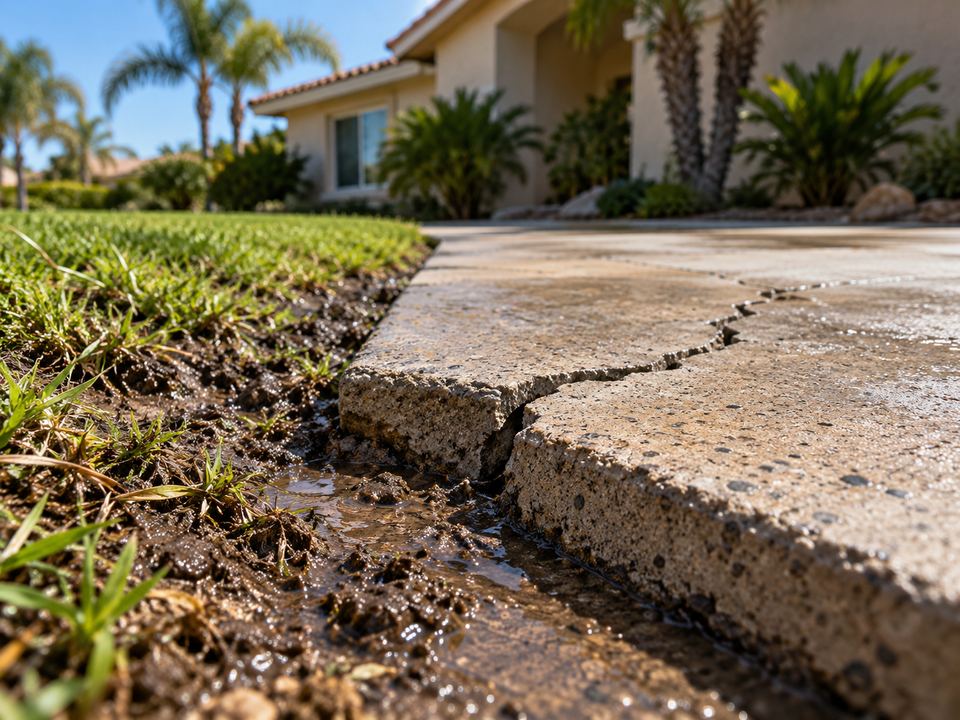
Long-running leaks can wash out soil, leading to depressions in the yard or new cracks in walkways and driveways. Sometimes you can hear hissing near the meter box or where the line enters the house.
6. Rusty or discolored water
Discoloration on its own doesn't mean a leak. It can, however, point to corroding older pipe, which is one reason a line may start failing.
Could also be: disturbance in the public water system. If neighbors notice the same thing, contact Golden State Water.
What to do next
- Note what you've seen and when it started.
- If water is causing damage, shut off your main valve if you can do so safely.
- Report leaks at the meter or in the street to the utility.
- For the customer-side line, talk to a provider about leak detection and water service line repair.
Please don't dig to find the pipe yourself. Gas, electric and communication lines may be buried nearby. Excavators in Southern California contact DigAlert / 811 before digging.
This guide is general information, not a diagnosis. An on-site assessment by a qualified provider is the only way to know what's happening with a specific line. Gardena Water Line Pros is a referral service, not a plumbing contractor.
Related guides
Seeing more than one of these signs?
Call to be connected with an independent provider who can assess the line.
Referral service: Gardena Water Line Pros is not a plumbing contractor. Your call may be connected to an independent, third-party service provider who sets its own availability, pricing and terms. Read our referral disclosure.